











Project Zomboid review
Project Zomboid
Project Zomboid is one of the most uncompromising survival games ever created, offering a slow-burning, deeply systemic experience that values planning, realism, and consequence above spectacle. Developed by The Indie Stone, this long-running project has evolved steadily over the years, gaining a devoted audience thanks to its complexity and refusal to hold the player’s hand. Rather than presenting power fantasies or scripted hero moments, Project Zomboid asks a simple but brutal question: how long can you survive?
A World That Does Not Forgive Mistakes
Set in a fictional region of Kentucky, the game drops players into a quarantined zone where society has collapsed. From the moment you begin, the tone is clear: resources are scarce, danger is constant, and even small errors can spiral into disaster. There are no cinematic introductions or tutorials that protect you. Every new character exists under the same rule, emphasized by the opening message reminding you that this is the story of how you die.
The map is vast and interconnected, featuring towns, suburbs, industrial zones, forests, and farmland. Each location feels purposeful, offering different loot opportunities and risks. Urban areas provide better supplies but higher danger, while rural zones are safer yet limited. This balance forces meaningful decisions about where to explore, where to settle, and how much risk is acceptable.
Survival Systems Built on Realism
Project Zomboid distinguishes itself through its layered survival mechanics. Hunger, thirst, fatigue, stress, boredom, illness, and injury all interact with one another. Neglecting sleep affects combat ability and awareness. Poor nutrition impacts long-term health. Even emotional states matter, as panic or depression can reduce effectiveness in critical moments.
Combat is intentionally clumsy and dangerous, discouraging reckless encounters. Weapons degrade, stamina drains quickly, and being surrounded is often a death sentence. This design reinforces avoidance, planning, and environmental awareness rather than constant confrontation. Survival is achieved through preparation, not dominance.
Character Creation and Progression
Before entering the world, players build a character using an extensive trait system. Professions grant starting advantages, while positive and negative traits shape long-term playstyles. Choosing to be athletic, clumsy, anxious, or strong has lasting consequences, making each run feel distinct.
Skills improve through use and practice, from carpentry and cooking to mechanics and farming. Reading books accelerates learning, rewarding players who take time to plan their progression. Over time, characters can become highly capable survivors, but reaching that point requires patience and careful play.
Base Building and Long-Term Survival
Establishing a safe base is one of the most satisfying aspects of the game. Players can barricade windows, reinforce doors, build rain collectors, grow crops, and generate electricity using generators. Every improvement increases chances of long-term survival while introducing new responsibilities such as fuel management and noise control.
The passage of time matters greatly. Power and water shut off, food spoils, seasons change, and winter introduces additional hardship. These systems ensure that survival strategies must adapt constantly, preventing stagnation and encouraging forward thinking.
Mods, Community, and Replay Value
On PC, the modding scene is a major reason for the game’s longevity. Mods range from quality-of-life improvements to complete overhauls introducing new mechanics, maps, vehicles, and professions. This flexibility allows players to tailor the experience to their preferred level of realism or challenge.
Multiplayer further expands replay value by introducing cooperation, shared bases, and emergent storytelling. Whether playing solo or with friends, each session creates unique narratives shaped entirely by player choices and circumstances.
Visual Style and Atmosphere
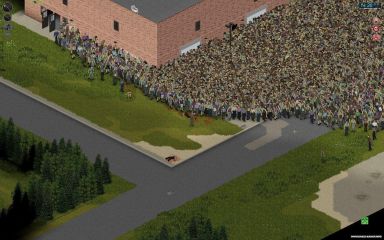
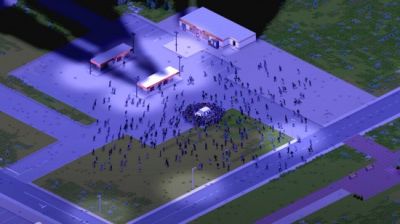
The isometric presentation may seem simple at first glance, but it serves the gameplay perfectly. Visibility, sound cues, and line-of-sight mechanics are all tied closely to perspective. The muted color palette, weather effects, and environmental decay reinforce the bleak atmosphere without relying on flashy visuals.
Sound design plays a crucial role. Subtle audio cues such as distant groans, breaking glass, or footsteps behind walls can mean the difference between survival and failure. Silence itself becomes a source of tension, making exploration nerve-wracking and immersive.
How to download Project Zomboid
Project Zomboid is available to download primarily on PC through platforms such as Steam and the official developer website. The game is not free, but it is frequently discounted during seasonal sales, making it accessible to new players. Console versions are not currently available.
Supported platforms include Windows, macOS, and Linux. Installation is straightforward through Steam, requiring only a standard download and setup process. The game does not require an emulator or cloud service for PC users.
Minimum system requirements are modest, including a dual-core processor, 8GB RAM, and a dedicated graphics card capable of running OpenGL. Mods and cheats are widely available for single-player use, especially through the Steam Workshop, while online servers may restrict modifications.
In most regions, Project Zomboid is unblocked and can be played without restrictions. In environments such as schools or workplaces where gaming platforms may be limited, local installation on a personal device is the most reliable option. For players seeking a survival experience that values intelligence, patience, and realism, Project Zomboid stands in a class of its own.
To download the app, you will get links to the Official Website and/or official digital markets.